
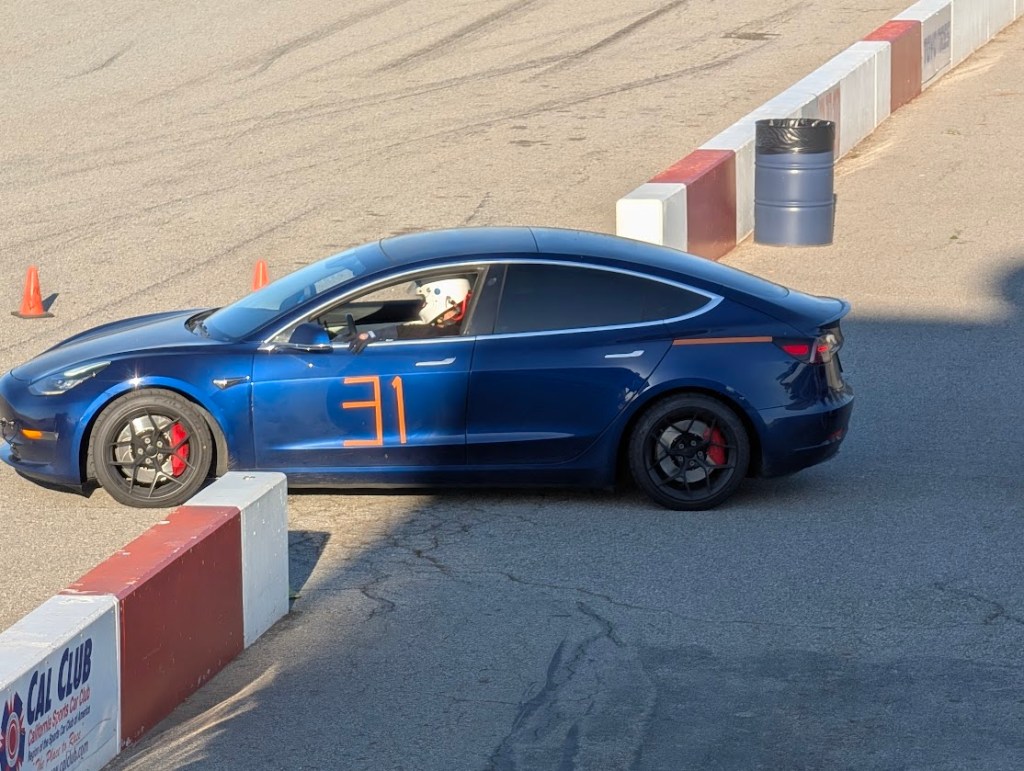
We took the Model 3 out for a proper shakedown this past weekend with Cal Club. A few hours of real lapping told us more than a month of theorizing would have. Here’s what we learned.
Instant torque is harder than it sounds
The biggest driver-adjustment item is corner exit. With an ICE car you roll into throttle and the power builds. The Model 3 doesn’t roll — it just goes.
On most exits we had to actively dial the right foot back to keep the rear planted. Not a problem so much as a calibration thing, and a reminder that EVs at the track ask different things of the driver than they do on the road.
Even in a straight line, going flat out is fun, but until we solve the thermal cascade a lot of drive attention goes to watching temps.
We cooked a set of pads
The photo tells it better than we can. When we turned regen off to feel out the brake balance, the pads took the full load — and they didn’t love it.
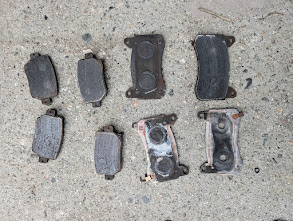
On a ~4,000lb car shedding speed into hot corners, dropping regen is a step change in pad thermal load. They went from “supplementing the motor” to “doing 100% of the work,” and the compound wasn’t sized for that.
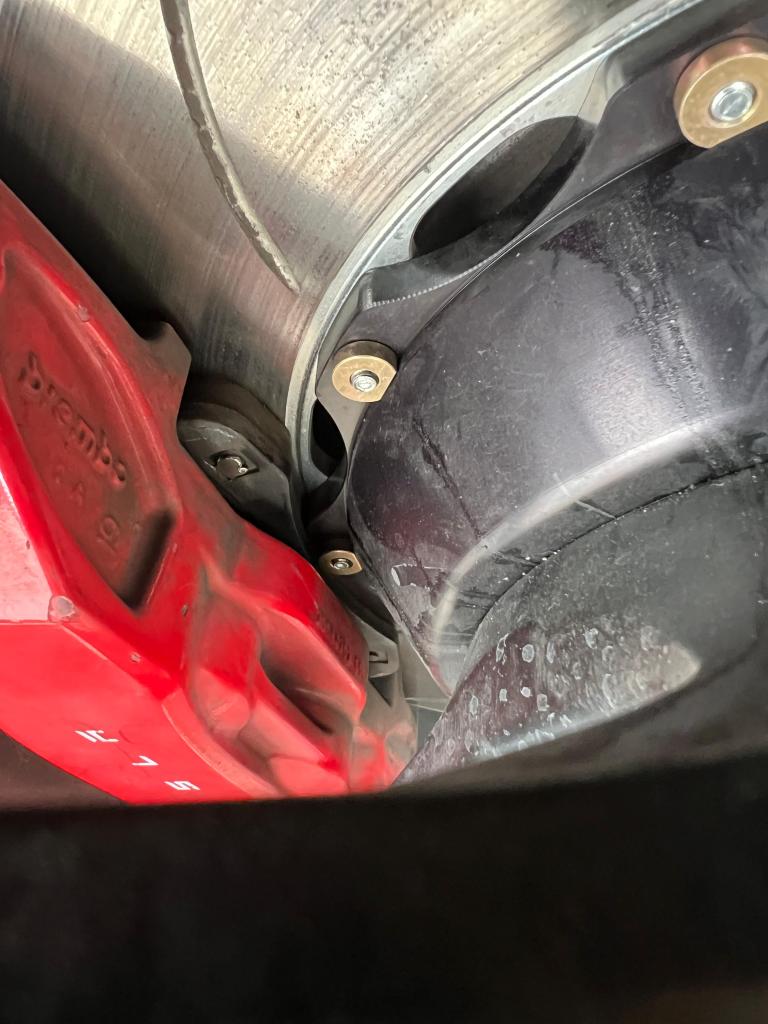
Brake cooling is the next major upgrade. We already have the rotors. Next up: ducts, hood vents, and a pad compound that actually wants to be hot.
Below – unsuspecting pads…
The cooling cascade is real
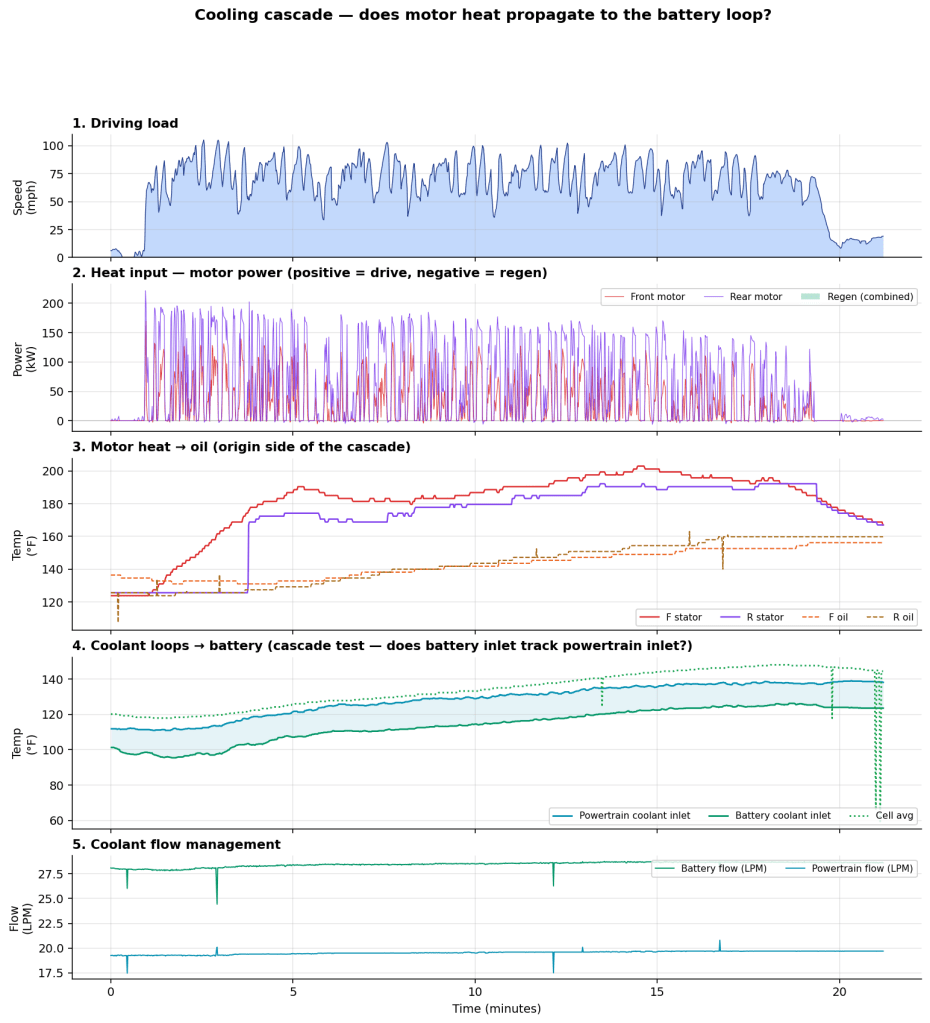
Telemetry told a clear story. The rear drive unit heats up first. That heat dumps into the shared coolant loop, which means by the time the battery wants cooling, the system is already saturated. You can watch the pack temp climb in real time once the DU has saturated upstream.
So the next mechanical upgrade is a dedicated rear DU oil cooler. Take the DU off the shared loop and the octovalve can actually do its job keeping the pack happy. That single change should buy us meaningful stint length without touching anything else.
Fun to hand large log files to Claude and get help parsing. Def saves a bunch of time.
Snap oversteer has known answers
We saw a few moments of rotation we didn’t ask for, resulting in a trip into the desert coming out of Bus Stop. The good news is all the levers are well-understood: rebound damping, tire pressures, camber, and front/rear power distribution. Add a touch of rear toe-in and we expect the car to settle considerably. Nothing here requires new parts — just systematic tuning.
Misting system is still TBD
The evaporative intake-air cooling rig didn’t get a proper test this weekend. The theory is good — drop incoming air 15–25°F on a dry day and take pressure off the cooling stack — but we spent time changing brake pads and then realized we’d likely need more brake cooling before we could meaningfully test other thermal interventions.
We’re rethinking the format
Here’s the candid part. Our math for a 24 Hours of Lemons entry looks like roughly 45 minutes of green-flag lapping, then 35 minutes of charging (including the trip off-track to a Supercharger). That’s not really racing — it’s pit-crew work with occasional driving. And it’s not in the spirit of Lemons even setting aside the EV-in-a-junkyard-car series optics.
So we’re pivoting. Time attack is where this car will shine: 15–20 minute sessions where instant power, rich telemetry, and a forgiving platform are advantages instead of a problem to manage. Series like Gridlife TrackBattle and NASA TT make a lot more sense for what we’ve built.
Doesn’t mean we wont do Lemons with an EV…just going to be more fun in another format and we’ll keep Lemons constraints in mind as we build, especially for the cage.

