
It arrived. And it’s not…terrible. So far.
We wont know for sure until we actually get a look at the battery pack and eventually run a diagnostic with Tesla to see if we can use the superchargers again. But the other issues seem solvable.
o o o
The Arrival
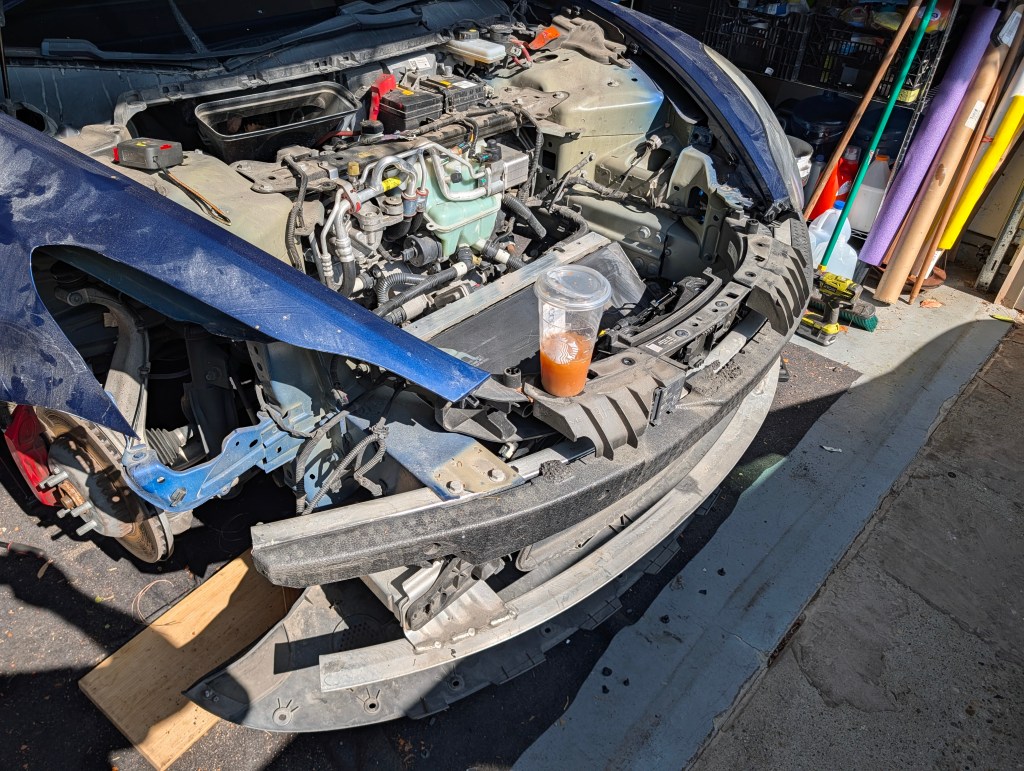
The car arrived from Copart on a flatbed. Blue. Dirty. Front passenger side clearly took a hit. Passenger door opened after a bit of encouragement. But it powered on, the touchscreen lit up, and it had 53% charge showing. Which meant the battery pack — by far the most expensive component — was alive.
First order of business: Service Mode. Tesla hides a full diagnostic suite behind the screen. It’s kind of insane how much is available onboard and I guess we’re super grateful this hasn’t been locked down more.
o o o
The Diagnostics
First up. A low coolant warning. Oh dear.
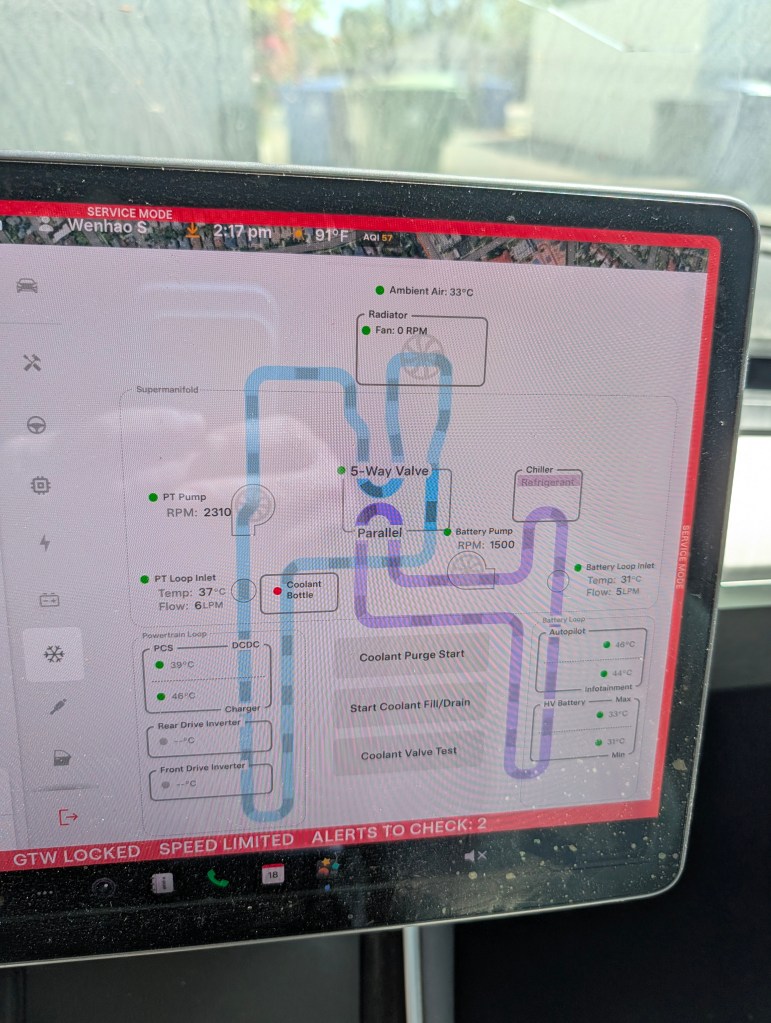
Maybe the radiator or something else took a hit – it’s mounted basically the same way radiators are mounted in ICE cars. So off to the coolant system screen. It shows you both coolant loops — the powertrain loop (blue, cooling the motors and power electronics) and the battery loop (purple, keeping the cells happy). Both pumps were spinning. Flow rates looked normal. Temps were reasonable for a 91°F LA day. In March. Why are we Outrunning Carbon again?
This is probably a good moment to reflect on the last time we were losing coolant in the 924. It turned out to be a blown head gasket! So the possibility of extreme fun and many hours of work should be noted. It should also be noted, that the 1987 924 didn’t have a screen to share diagnostic information.
Ok back to the diagnostics.
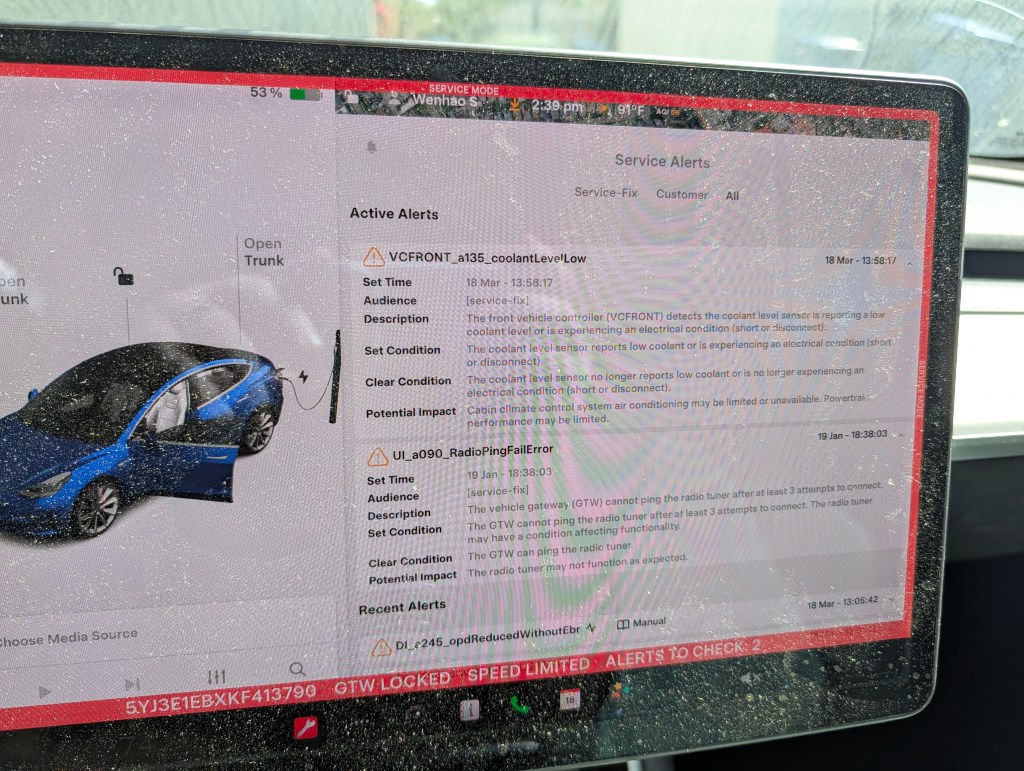
The Coolant Bottle indicator was red, and the alerts screen confirmed it — VCFRONT_a135_coolant LevelLow was firing persistently. That’s the front vehicle controller telling us the coolant level sensor is reporting low, which makes sense given a front-end collision. Somewhere in the front of the car, coolant is either leaking or was lost in the impact. The other interesting thing: both the Front and Rear Drive Inverter temps showed “–°C” meaning they weren’t reporting. The front inverter is worth watching closely given that’s where the collision happened.
o o o
COOLANT FIX?
The other fun part about the Tesla. You can top up coolant and then run a purge process in service mode. For folks who have changed coolant and then tried to remove air pockets…you will know how much of a time saver this is. There are long forum posts about super secret ways to purge coolant systems of air, though now there are various external pressure test systems to move this along. But Telsa? It’s a software routine.
One thing that is the same. We used fluorescent dye in the coolant system, so after running it for a bit we should see any leaks. So far…nothing, but we’ll keep monitoring.
Ok, so back to figuring out what else is wrong – i.e. why the alignment is way off and the steering assist and traction control is unhappy – no alerts, but even just moving the car into the garage, it was very unhappy. There generally aren’t any good clunk sounds where suspension is concerned. There are just more and less expensive noises. Ours sounded expensive.
o o o
The Teardown
With the diagnostics in hand, it was time to pull the front end apart and see what we’re actually dealing with. Off came the bumper fascia, frunk covers, etc. Tesla makes this relatively straightforward — it’s mostly plastic clips and a handful of bolts. Then there is pretty easy access to the important bits.
Once the skin was off, the damage story became clear. The impact came in through the front bumper on the passenger side and the energy traveled backward through bumper foam → bumper beam → crush cans → fender supports (upper path), and bumper beam → subframe crush cans → subframe (lower path).
Or did it? The things that should have crumpled, didn’t crumple. Huh? Maybe just the wheel and suspension took the hit?
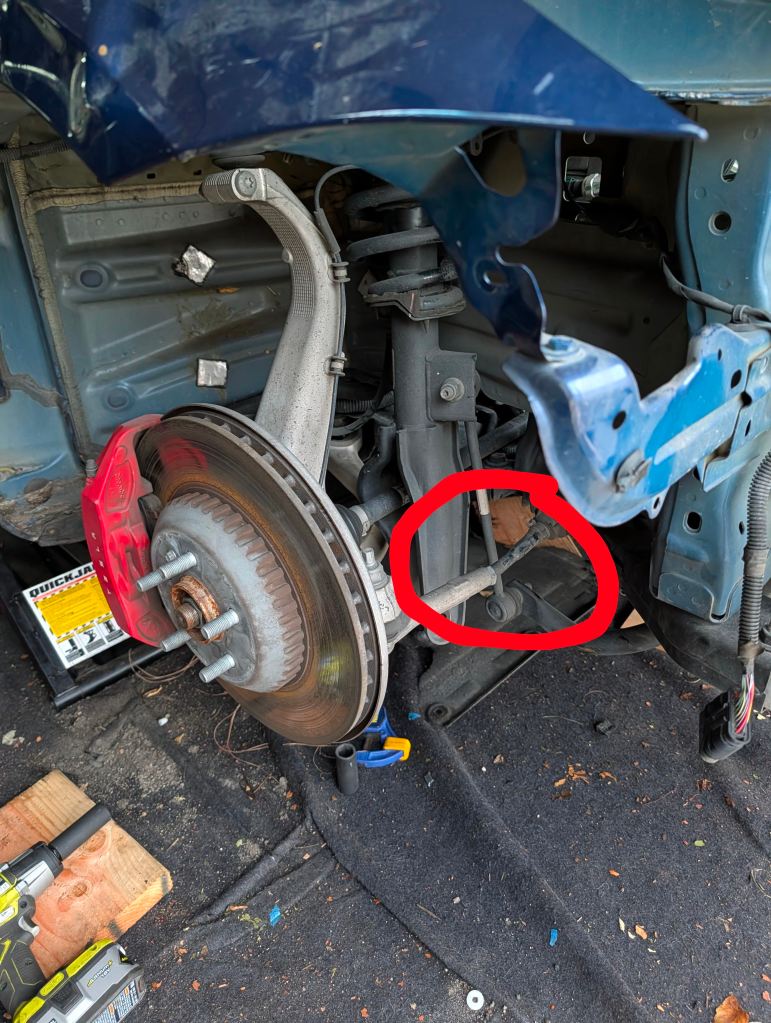
Before getting to the frame and subframe, there was one obvious problem. The impact of whatever happened, bent the tie rod. This seems to be part of the design on Teslas – it’s a very common thing caused by everything from potholes, so curbs. That’s certainly become the top candidate for what would have made the car un-driveable.
o o o
The Measurements
The big question with any collision repair: is the structure straight? If the subframe or strut towers are tweaked, everything downstream — alignment, handling, tire wear — becomes a nightmare. Within a certain range it’s probably quite appropriate for Lemons, but beyond some point, it’s s safety issues and we might be better off fixing and selling and looking for another candidate car.
We’re not going to get perfect measurements, but we did a bunch of comparisons using just a tape measurement. For example, from the bolts at the rear of the subframe to the front lip of the battery pack — checking if the subframe shifted relative to the battery. Both sides came in within a millimeter. Ok.
Then from the bolts on top of the strut towers to reference points along the cowl and side mirrors — checking if the towers moved relative to the upper body. Again, within a millimeter.
We’re not being hired by a bodyshop anytime soon, but this is seeming less and less bad. But also quite mysterious now. What happened to this car? Why is the damage seemingly confined to a bent tie rod, damaged fender and broken headlight?
o o o
The Suspension
We started reviewing and removing bits of the front suspension. One common issue with Model 3, especially performance is the combination of acceleration and turning give the front suspension a real workout. And there are a bunch of places where the bushing just give up. Here’s an example. These two pieces of metal used to be 1, joined by a bushing. No more.
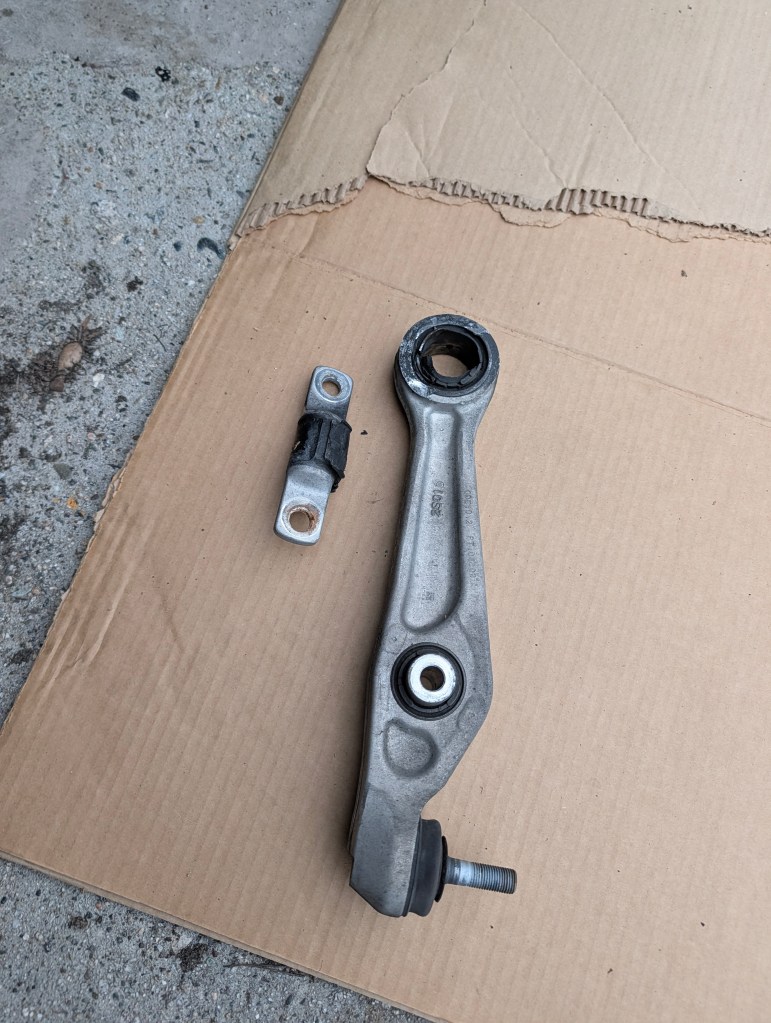
So this part of the suspension is functioning on hopes and dreams, flopping about, literally not connecting the wheel to the subframe. That’s unlikely related to an accident…just neglect and probably some odd clunky noises.
Turns out almost every bushing on the front suspension was toast, so we’ll add fresh bushings everywhere. This is much more likely to be considered a safety expense vs go faster. We’re not going to go crazy with high performance parts. In fact, we’ll almost certainly use some of the cheapest OEM replacements we can find. It’s just not really possible to reuse bushings…at least not safely.
o o o
What’s Next
It seems like a fairly straightforward path to fix the front suspension. And we can probably bend and adjust mangled panels and get things put back together just fine for Lemons inspection. But we want to be able to get the car tested so we can get supercharging reinstated, else we’re not going to be able to race!
So once we get the fixes done, the real adventure is the California DMV salvage title process — a multi-visit odyssey involving CHP inspections, brake and light certifications, temporary operating permits…And once we get through that, then there’s Tesla’s own process to reinstate Supercharging, which requires a separate high-voltage safety inspection at a Tesla Service Center.
For now: suspension parts arriving this week, coolant system could be unrelated to the collision. We can keep running the system even without driving. And then we start putting it all back together.
The Temperrosa isn’t going anywhere — she’s still the OG race car and has her own todo list. But Car No 2 is officially underway. Zero emissions. Maximum recycling. And fast!
 Outrun Carbon