
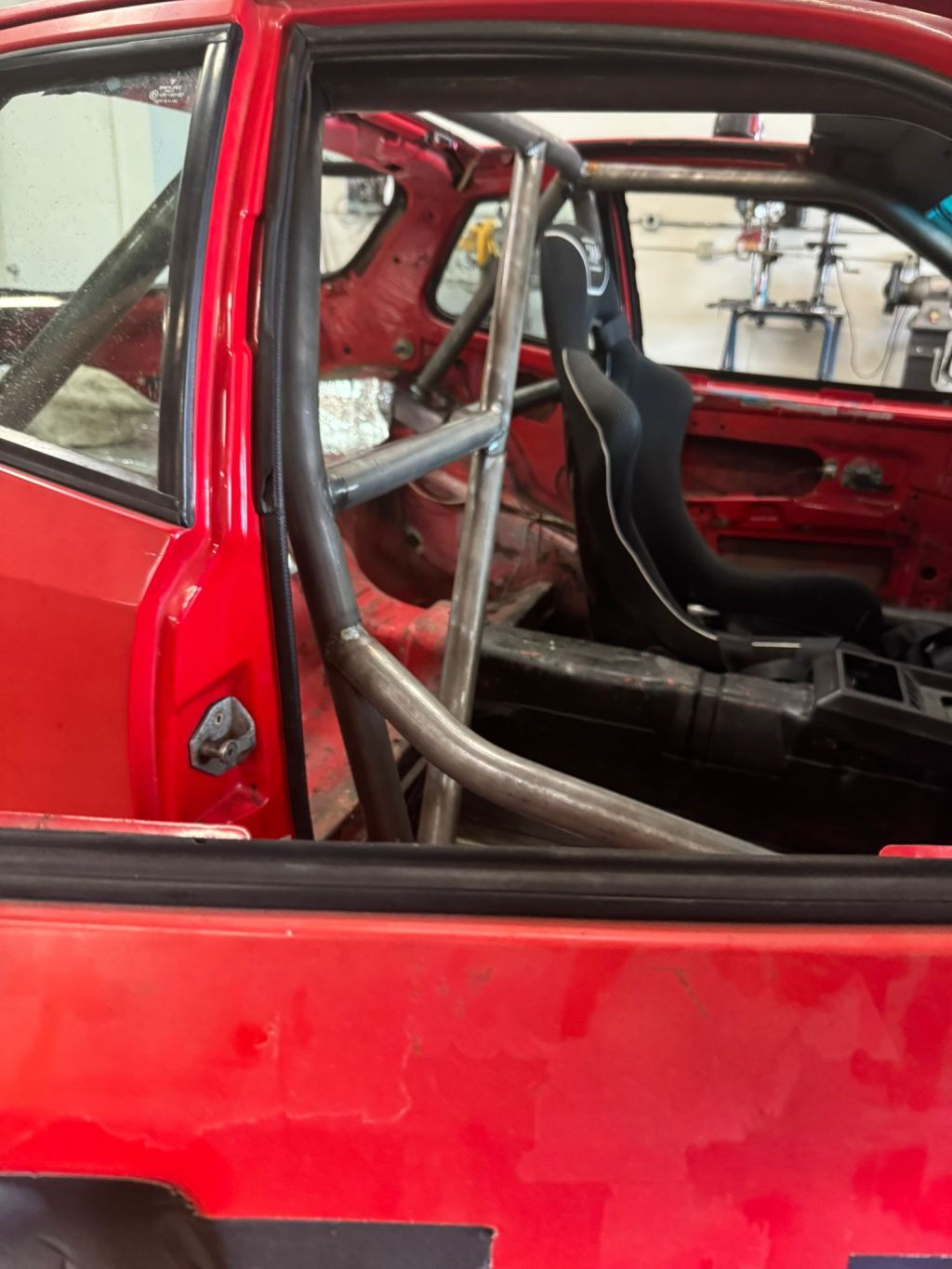
The safety cage is the one thing we decided not to DIY. First, there is a tech/safety inspection to pass and the longest, most detailed section deals with details of the cage including use of force spreading plates, gussets, etc.
Cages are designed for highest frequency crash situations – sure there is a small possibility of being upside down (which also requires fuel management). But there is more likelihood of finding yourself getting sideways and then getting t-boned. Hence the 2x side bars (in addition to the one already integrated into the door).
AI & ROBOTICS FOR Quality Control
Lemons is all fun and games, except for safety requirements. There is a mandatory tech inspection of which the roll cage inspection is perhaps the most detailed. There are visual checks related to weld quality as well as overall structure such as reinforcement points – for example, in a side impact, how might the structure collapse (in simple terms – where are the reinforcement points).
We’re fortunate to work with someone who has done A LOT of welding and so has a deep intuition about how metal will behave under loads and impact. And we started with a cage cut for the car from a firm that specializes in cage design. So we don’t have too many concerns, but it did make us think a bit about where and how we might get additional inspection and fabrication help from AI and robots.
There is a bunch of work that is ongoing in using robots and various imaging. It’s no accident that one of the most valuable robotics companies is focused in inspection, often of metal structures – https://www.geckorobotics.com/. At Third Sphere we work with teams like https://www.pallon.com/ focused on the same kind of inspections but for a wider range of materials used in water and sewer systems. And https://toggle.is/ is automating welds and associated quality assurance.
In the software world, it’s already possible to model roll cage designed. For example FEA will let you simulate the cage under various loads to see how it collapses, ideally revealing that the human might break some bones, but not be crushed. Generative AI will no doubt be used in interesting ways to help cut weight without giving up performance, but it’s worth noting that the underlying models are deterministic…i.e. AI isn’t being used to build the model, just generate and evaluate results.
 Outrun Carbon