
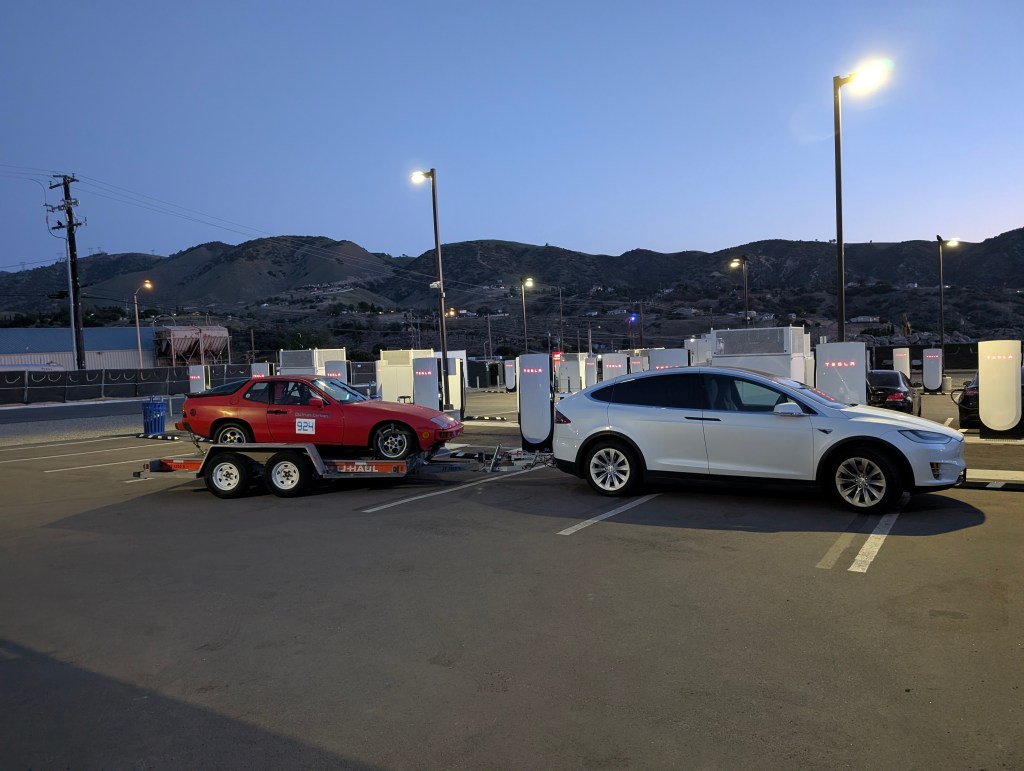
“That’s really fun. Well done!” – Max Abrahamson, after his first session in the Temperossa.
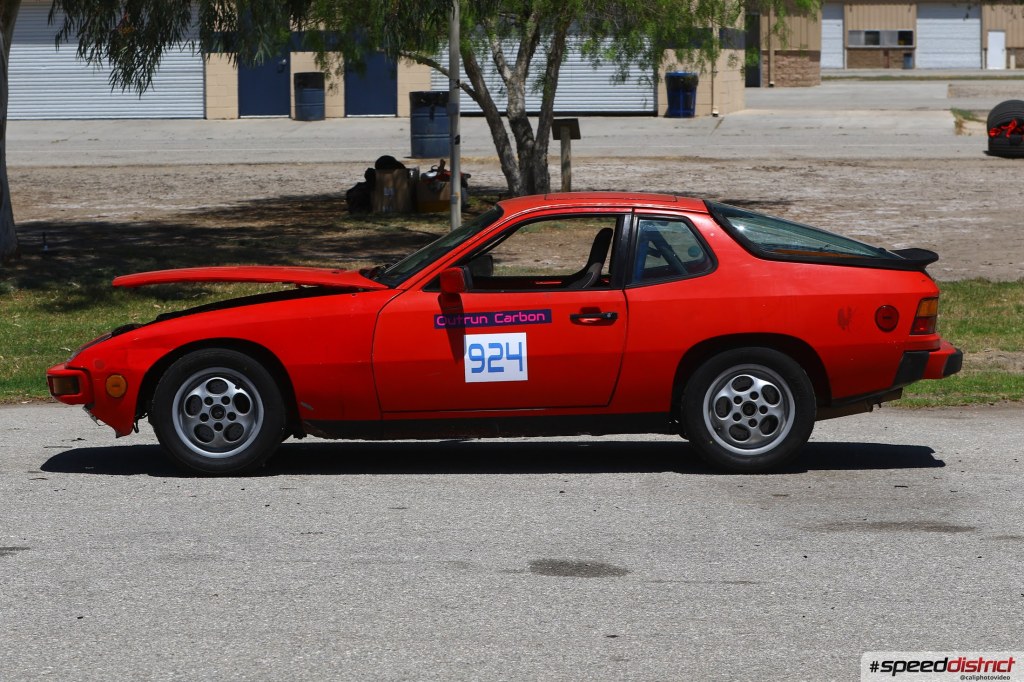
The first track day for our 1987 Porsche 924S “Temperossa” is in the books, and it was a resounding success! Today I want to share how artificial intelligence, particularly large language models like Claude, ChatGPT and Gemini helped our family take our first steps to build a 24 Hours of Lemons race car.
AI as Our Technical Co-Pilot
From the beginning, we saw this project as an opportunity to explore how LLMs could help with designing, troubleshooting, and optimizing a race car. With the 924S being relatively uncommon but having a dedicated enthusiast base, it provided the perfect balance—enough data existed online for the AI to have “learned” about these cars, but not so mainstream that solutions were obvious.
As I noted back in November 2024, one benefit of choosing the 924S was its peculiar position in the Porsche world—relatively cheap, but with enough racing history that there’s a “pretty deep body of knowledge around mods, trouble-shooting, substitute parts.” This meant LLMs had been trained on forum posts from places like Pelican Parts, Rennlist, 944-spec.org, and 924board.org.
The “trust but verify” approach became our mantra. Claude.ai would suggest solutions, and then we’d confirm through forum posts or other human sources. This approach “seems very high. The time required for ‘trust but verify’ is now paying off with more trust and less verify.”
Budget Ingenuity with AI Assistance
The really fun part of $500 Lemons budget restriction is that forces creative thinking, and AI proved valuable for finding affordable alternatives to expensive parts:
- Oil Cooling Solution: When facing oil cooling issues, Claude suggested using a BMW transmission cooler as an oil cooler, leading us to find a $30 option on eBay with free shipping. The AI provided detailed specs on which BMW models to target (E36 325i/328i, E46 323i/325i/328i, and E39 528i) and what to look for when inspecting them.
- Emissions System Hacking: When our fuel vapor canister was failing and a new OEM part would cost $360, Claude helped us identify that a Vanagon canister from the same era would work with minor modifications—for just $19.Yes we know race cars don’t need emissions systems, but $19 seems fine and worst case we’ll file it under the safety budget.
- Suspension Upgrades: For our suspension setup, we followed Claude’s suggestion to use “Superbeetle coilovers as helper springs” in the rear and “slightly modified MarkI Golf Alibaba sourced coilovers” up front—solutions the AI found by analyzing forum discussions that cost “probably 20x less than ‘the proper’ racing parts.”
- Alignment Assistance: When tackling the tricky rear suspension alignment, Claude helped translate our string method measurements into specific recommendations for tie rod adjustments. While visual diagrams from AI were still somewhat lacking, the numerical recommendations proved remarkably accurate.
- Weight Reduction: For weight savings, we followed the AI-suggested path of removing the pop-up headlights (saving about 20 pounds), replacing them with LED lights behind home made, heat-gun-formed plexiglass lenses mounted with repurposed hose clamps. This not only improved our power-to-weight ratio but cleared access to the engine bay and made some room for more cooling options.
Oh yeah, that pop-up light system will be sold and the funds go back into go-faster bits.
Track Day Success: The Proof is in the Performance
All this AI-assisted preparation culminated in our first successful track day, with results that exceeded our expectations:
- Competitive Lap Times: Our 1987 924S delivered lap times comparable to our 2010 Mini JCW—an impressive achievement for a 38-year-old car running on budget modifications.
- Solid Thermal Management: Despite temperatures reaching 90°F, our BMW transmission cooler repurposed as an oil cooler handled the heat very well through multiple 30-minute sessions of hard driving, even when pushing the engine to 6,000 RPM. May still go to an Alibaba cooler, but we’ll see.
- Balanced Handling: The 924S is renowned for its near-perfect 50-50 weight distribution, but that advantage can easily be squandered with poor suspension setup. The AI-suggested suspension modifications and alignment settings performed like they were the result of extensive testing rather than first-day configurations.
The Limitations of AI SO FAR
While LLMs have proven incredibly useful in our project, we’ve also encountered clear limitations that required human expertise to overcome:
Limited Exploration of Novel Solutions
LLMs excel at synthesizing existing knowledge but struggle with truly novel design exploration. For example, when considering aerodynamic improvements, AI could only suggest configurations that had been discussed online by other racers. It couldn’t generate genuinely new designs that hadn’t been tried before.
The future likely includes LLMs working alongside simulation tools to explore new aero designs, but we’re not there yet. Even when that happens, as the team at Reynko works toward the first environment for error-free fluid modeling, there will still be a gap between simulation and reality that requires physical testing to verify results.
Price Accuracy and Complex Trade-offs
When diagnosing a faulty MAF (Mass Air Flow) sensor, the AI suggested two options: building a new MAF around a modern Bosch sensor or purchasing a complete drop-in replacement via Alibaba. What seemed straightforward required additional research beyond what the AI could provide.
The pricing information wasn’t always accurate in the AI’s responses, and the complex trade-offs between DIY solutions (with the added challenge of packaging an Arduino controller in a hot engine bay) versus ready-made parts required human judgment and additional research. We ultimately determined that the Alibaba option would be both cheaper and more reliable, but only after supplementing the AI’s advice with our own calculations.
3D Visualization and Spatial Reasoning
As we discovered during our suspension alignment work, LLMs still struggle with spatial reasoning and producing accurate diagrams. When we asked for suspension alignment diagrams, the result was confusing and not particularly useful. The AI was much better at providing numerical specifications than visualizing how components physically interact in three-dimensional space.
WHAT’s NEXT
We have a few safety things to get done like the roll cage, fire suppression and electrical cut off.
For artwork, we expect to get help from AI like generating decals and designs.
And we’ll use AI to help us develop our race strategy from how to limit chances of wrecking to probability assessments on what spares we’re likely to need…
 Outrun Carbon